
Quick answer
Most healthy adults do not need an electrolyte drink every day. Water and regular meals are usually a practical starting point. Prolonged sweating can change the decision; illness may need a specific rehydration product and professional advice. Compare the serving size, sodium, carbohydrate, and mixing instructions before buying. More electrolytes do not automatically make a drink more suitable for you.
University of Arkansas Extension's everyday hydration guidance supports that distinction between ordinary hydration and substantial fluid losses.
What electrolytes add to a drink
Electrolytes are minerals that carry an electrical charge in body fluids. Sodium, potassium, magnesium, and calcium are examples. They help regulate fluid balance and support nerve and muscle function. You get electrolytes from food and drinks, not only from a sachet. MedlinePlus explains their roles and how imbalances are assessed.
The word electrolyte does not describe one standard recipe. One bottle may contain a little added mineral content; another may combine sodium with substantial carbohydrate. Compare the actual label rather than assuming two products with the same front-of-pack promise are interchangeable.
It helps to separate three questions: how much fluid you drank, what nutrients came with it, and whether your body needs a particular replacement plan. A bottle size answers the first. A nutrition label helps with the second. Neither settles the third.
Water, electrolyte mixes, and sports drinks compared
Start with the purpose of the drink. On a narrow screen, scroll this table sideways; keyboard users can focus it and use the arrow keys.
| Drink | Main role | What to check |
|---|---|---|
| Plain water | Everyday fluid intake without added sugar. | Access, taste, and a bottle size you can keep track of. |
| Electrolyte water, tablet, or powder | Fluid with added minerals; ingredients vary. | Sodium and potassium per serving, sugar, and the required mixing volume. |
| Carbohydrate-containing sports drink | Fluid and fuel together for exercise situations where both are useful. | Carbohydrate and sodium content, alongside the demands of the activity. |
The Australian Institute of Sport's sports-drink guidance describes carbohydrate-electrolyte drinks as a way to provide fluid and fuel together. A sugar-free electrolyte tablet does not provide that same carbohydrate fuel. That is a difference in function, rather than a reason to label one category universally better.
Do you need electrolytes on an ordinary day?
Usually, you do not need to add a daily electrolyte product simply because you are drinking water. University of Arkansas Extension notes that most people get enough electrolytes through ordinary foods and drinks. A day of meals, indoor work, and light activity is a different decision from replacing large losses.
If the real problem is forgetting to drink, choose a practical fix first: keep water within reach, bring a refillable bottle, or have water with meals. These are among the CDC's everyday water-drinking suggestions. For help making the cue repeatable, see our guide to building a water-drinking habit.
Taste can still be a preference. If you enjoy a flavored mix, read its label and decide whether the ingredients and recurring cost fit your routine. Enjoying a drink and needing an electrolyte replacement are separate reasons to buy it. Neither a premium bottle nor a larger collection of powders tells you what your everyday routine is missing.
When prolonged sweating changes the decision
Longer activity, heavy sweating, and heat can make electrolyte replacement relevant. Duration alone is not a personalized prescription: effort, conditions, food, and individual sweat losses all need context. Plan for the activity you are doing rather than treating a particular minute on a timer as a switch that makes everyone need the same drink.
In its workplace heat recommendations, NIOSH distinguishes water for moderate activity in the heat lasting less than two hours from balanced-electrolyte sports drinks when sweating continues for several hours. Those are occupational heat guidelines, not an instruction for an office worker to follow a hot-work drinking schedule.
A short walk before lunch and a long, sweaty outdoor shift therefore deserve different planning. For endurance training, repeated demanding sessions, or work in serious heat, get advice from a sports dietitian or your workplace health and safety team. Drinks also do not replace cooling, shade, and appropriate rest breaks.
Read the label before choosing the powder
Compare products using the amount you will actually prepare and drink. The FDA's Nutrition Facts guide explains that listed nutrient amounts apply to a serving, and that a serving size is not a recommendation for how much to consume.
- Find the serving. Is it one tablet, one scoop, one packet, or a whole bottle? Check servings per container too.
- Check the mixing directions. Write down the amount of water intended for that serving. Do not silently double the powder.
- Compare sodium. Look at milligrams per prepared serving, not just the total number of minerals advertised.
- Read carbohydrate and added sugars. Decide whether you are choosing an everyday drink or fuel for a specific activity.
- Check the rest. Read the ingredient list for caffeine and other additions you did not intend to buy.
On U.S. labels, the FDA's general guide considers 5% Daily Value or less of sodium per serving low and 20% or more high. This helps compare products; it is not an athlete's sweat-replacement target. See the FDA's sodium-label explanation.
A made-up label example
Suppose one packet lists 400 mg sodium and 8 g added sugar. Two packets provide 800 mg sodium and 16 g added sugar, even if you mix both into the same bottle. Doubling the water instead changes the concentration, but the whole prepared batch still contains the original packet's nutrients. These are arithmetic examples, not a recommended recipe or a description of a particular brand.
For a cost comparison, divide the pack price by its number of prepared servings. Check that the serving volumes match before comparing two prices. A cheaper-looking tub is not necessarily cheaper for the amount you intend to prepare.
Illness and medical restrictions need a different approach
An oral rehydration solution used for illness has a different purpose from an everyday hydration drink. If vomiting or diarrhea is causing significant fluid loss, ask a pharmacist or clinician which product and preparation are appropriate. The NHS dehydration guidance specifically directs people to pharmacy advice on oral rehydration solutions. Do not assume any sports drink or wellness powder is an equivalent substitute.
If you have kidney disease, a prescribed fluid or sodium limit, or medicines that affect potassium, discuss routine electrolyte products with your care team. The NIH potassium fact sheet explains why kidney disease and certain medicines can raise the risk of excessive blood potassium. Follow your own plan rather than an influencer's daily scoop count.
Persistent dizziness, unusually little urine, or a fast heart rate warrant prompt medical advice; confusion or difficulty breathing can require emergency care. Do not keep trying different powders while serious symptoms continue. A hydration app cannot identify the cause of those symptoms.
Keep the fluid record separate from the nutrition label
An electrolyte drink contributes fluid, but its fluid volume and ingredients answer different questions. If you prepare one bottle with powder and drink it, count that drink once. Recording the mixing water and then the prepared bottle as two separate drinks inflates the total. Record what you consumed, not what was available.
Use a notebook or tracker for amounts and times, and keep the package information separately if you need to discuss sodium or other ingredients. Decide whether your record covers plain water or all drinks and keep that convention consistent. For the broader question of daily quantities, read how daily water intake references work.
A volume-only example in HydroFast
HydroFast's Water tab has preset and custom entries in milliliters or US fluid ounces. To record a custom amount, open Water → + Custom, enter the amount, then choose Save Intake. Choose oz or ml under Settings → Units. The glass and bottle examples explain why the amount actually drunk can differ from a container's capacity.
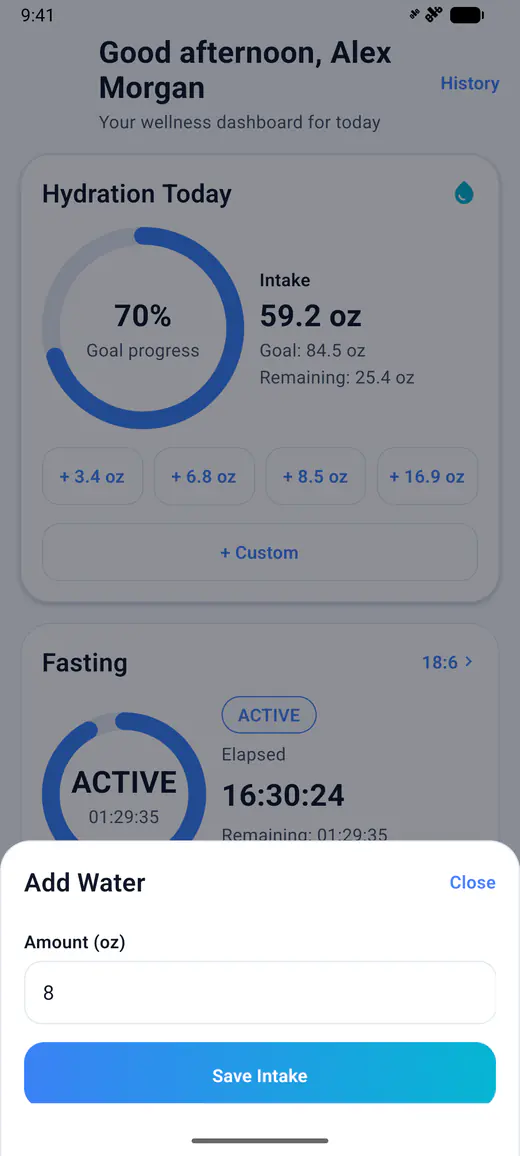
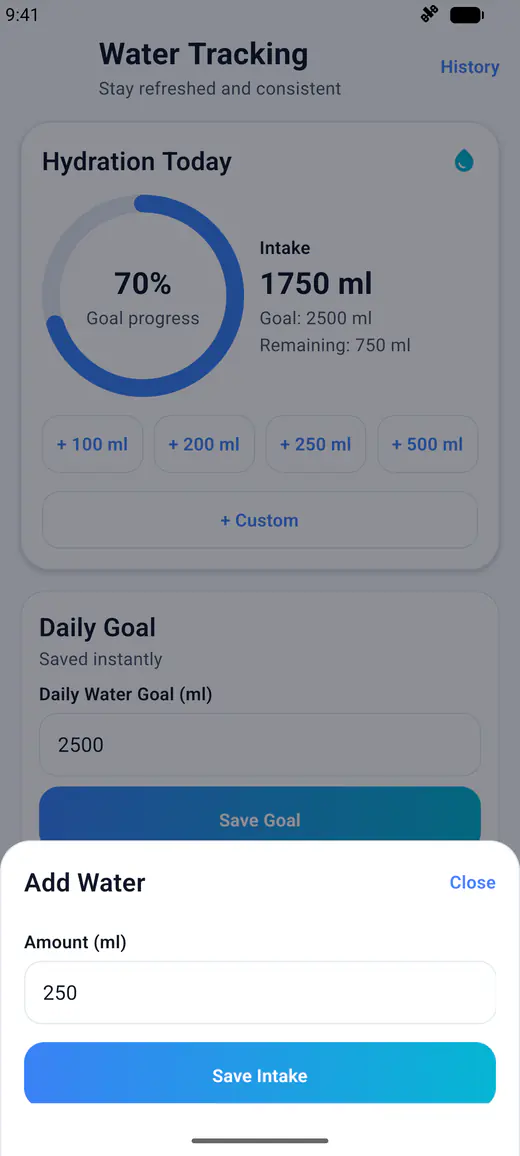
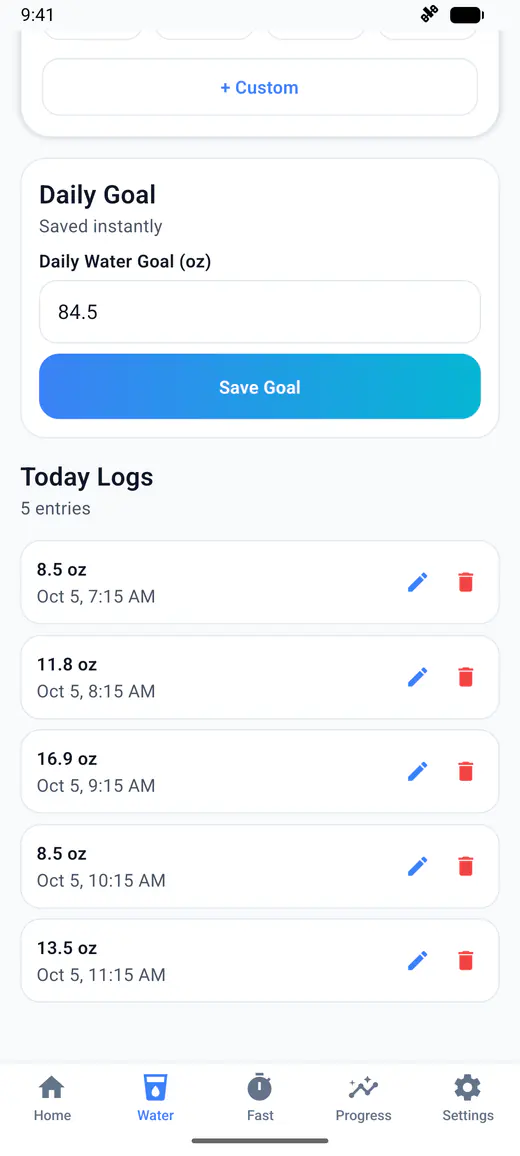
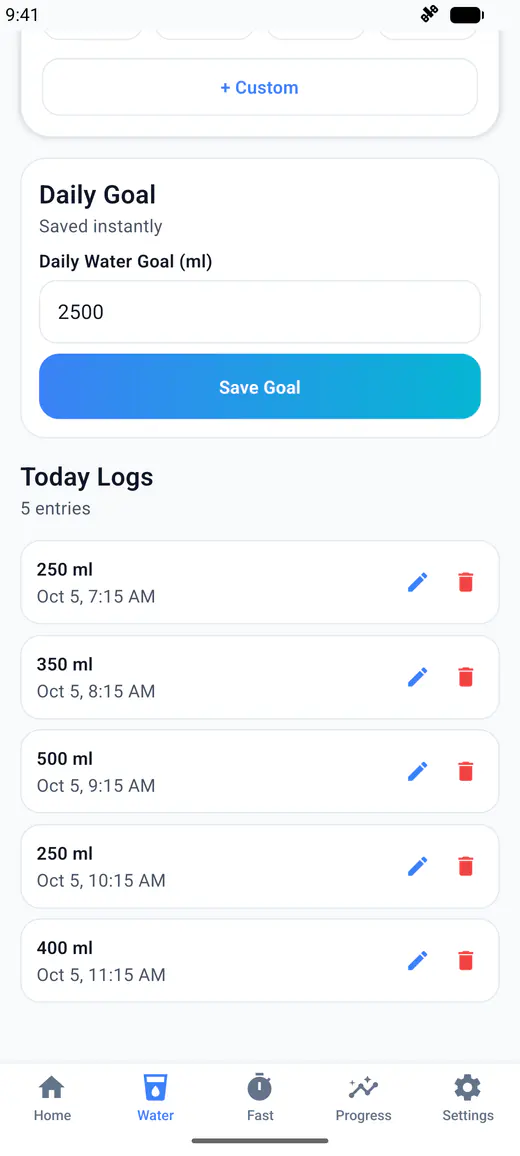
HydroFast does not distinguish plain water from an electrolyte drink, calculate nutrient intake, measure sweat losses, or recommend an electrolyte dose. If you use its amount field to include another drink, that remains an undifferentiated water log. A full progress ring means you met your chosen logging goal; it does not confirm adequate hydration or normal blood electrolyte levels. Keep any clinician-directed record in the form they request.
Choose for the day you are having
Before adding another packet to the shopping basket, name the situation it is for. Is the problem access to water, an inconsistent routine, a demanding activity, or an illness that needs advice? Then check the label and preparation instructions against that purpose. You can make that decision without owning a tracker or buying a special drink.
If your question is specifically about drinks during an intermittent fasting window, use the separate water and fasting guide. This article addresses drink selection for hydration, not a prescription for fasting.
Electrolyte drink questions
Do electrolyte drinks hydrate you better than water?
Not in every situation. Plain water is generally suitable for everyday hydration. Electrolyte drinks can serve a specific purpose when fluid and salt losses are substantial, such as prolonged sweating. A product's ingredients and your circumstances matter more than the word hydration on its packaging.
Are sugar-free electrolyte drinks always the better choice?
No. Sugar-free means the drink does not provide sugar; it does not establish whether you need its electrolytes. During prolonged exercise, a carbohydrate-containing sports drink can provide fuel as well as fluid. For an ordinary day, plain water avoids needing to choose between those formulations.
Do electrolyte drinks count toward daily fluid intake?
Yes, the fluid you drink contributes to your fluid intake. Count the prepared drink once, not the mixing water and the finished drink separately. Its sodium, carbohydrate, and other ingredients remain separate nutritional considerations; a fluid total does not tell you whether those amounts suit you.
Can I get electrolytes from food instead of powders?
Yes. Foods and drinks supply electrolytes. A varied diet includes sources such as fruit, vegetables, beans, dairy, nuts, and other foods. This is different from replacing unusually large losses during prolonged sweating or following a clinician's treatment plan.
Should I add extra electrolyte powder to make a stronger drink?
Follow the product's mixing directions rather than improvising a stronger concentration. Using more powder changes the sodium and other ingredients you consume, even if the bottle contains the same volume of water. A clinician or sports dietitian can help when you need an individualized replacement plan.
Can HydroFast tell whether my electrolytes are low?
No. HydroFast records water amounts and shows tracking progress. It does not measure electrolyte levels, sweat losses, sodium, potassium, sugar, or beverage type. An electrolyte imbalance requires clinical assessment; a completed water goal cannot confirm normal electrolyte levels.
About this guide
Written by HydroFast's developer using the linked public guidance, checked October 29, 2026. This is general information for adults, not medical advice or an individualized sports-nutrition plan. HydroFast is a wellness tracker and does not diagnose dehydration or electrolyte disorders. Follow medical advice that applies to your health and medicines.