
Quick answer
Yes, you can get dehydrated in winter. Cold exposure can reduce thirst by up to 40%, while you keep losing water through extra urine, breathing cold and dry air, and sweat under winter layers. To stay hydrated in winter, drink at set times instead of waiting for thirst, choose warm drinks you enjoy, drink before and after time outdoors, and watch for darker urine or headaches.
Why dehydration is easy to miss in winter
Cold weather works on both sides of the hydration equation. Some water losses go up, and the signal that normally tells you to drink gets weaker. Five effects tend to stack.
Cold weather blunts thirst
In a 2004 study published in Medicine & Science in Sports & Exercise, researchers compared men standing and walking in 39°F (4°C) air with the same activity in warm air. Cold exposure reduced thirst by up to 40%, at rest and during moderate exercise, and it did so even when participants were already low on fluid. The authors suggest that cold narrows blood vessels in the skin, shifting more blood toward the body's core, where it may signal that fluid levels are fine.
The study was small, with fewer than ten participants in each phase, but its finding matches what military researchers describe from cold-weather field operations: people in the cold feel less thirsty even when they are short on water.
Cold makes you urinate more
Getting chilled increases urine output, a response researchers call cold-induced diuresis. The National Academies' water intake report lists cold, along with low oxygen at altitude, as a condition that increases urine output. That is one reason you may find yourself heading to the bathroom more often after a cold walk, even though you have barely had anything to drink.
Breathing cold, dry air costs water
Your airways add moisture to every breath before it reaches your lungs, and winter air holds very little of its own. The same National Academies report estimates that breathing cold, dry air adds about 5 ml of water loss per hour at rest and 15 to 45 ml per hour during strenuous exercise. A National Academies chapter on fluid balance in the cold adds that activity level affects breathing losses even more than temperature does. A snow-shoveling session or a winter run costs noticeably more water than a cold commute.
Winter layers hide sweat
Insulated clothing is designed to trap heat, which works against you once you start moving. In that same fluid-balance chapter, soldiers exercising hard in full cold-weather gear sweated heavily because the insulation stopped sweat from cooling them. Everyday coats are lighter, but the same mismatch happens when you walk briskly, carry groceries uphill, or clear a driveway. The sweat soaks into a base layer or evaporates into dry air, so it rarely registers.
You may drink less on purpose
The same researchers describe people in the cold deliberately limiting how much they drink to avoid getting up at night. The everyday version is skipping water in the evening, then never making up the difference earlier in the day.
On a narrow screen, scroll the table sideways. Keyboard users can focus it and use the arrow keys.
| Winter factor | What happens | What helps |
|---|---|---|
| Weaker thirst | Cold exposure can reduce thirst by up to 40%, so the usual reminder to drink arrives late or not at all. | Drink at set times instead of waiting to feel thirsty. |
| More urine | Getting chilled increases urine output, a response called cold-induced diuresis. | Replace what you lose with regular drinks through the day. |
| Cold, dry air | Breathing cold, dry air adds to the water you lose with every breath, especially during exertion. | Drink before and after shoveling, winter runs, or long walks. |
| Heavy layers | Insulated clothing traps heat during activity, so you sweat without noticing. | Remove a layer before you start sweating heavily. |
| Drinking less on purpose | People in the cold often limit fluids to avoid bathroom trips, especially at night. | Shift more of your intake to the morning and early afternoon. |
Do you need less water in winter?
Not necessarily. General fluid guidance does not change with the season. The U.S. National Academies set the Adequate Intake for total water at about 3.7 liters (125 oz) a day for adult men and 2.7 liters (91 oz) for adult women. That figure counts water from all drinks and food, and roughly 80% of it typically comes from beverages.
Those numbers describe healthy adults in general, not a personal target. You may need less on a quiet day indoors and more after an afternoon of skiing. The same report notes that for most healthy people, thirst combined with drinking at meals keeps hydration on track. Winter is the exception worth planning for, because thirst is exactly the signal that cold weather weakens. For how these figures compare with eight glasses and body-weight rules, see how much water you should drink a day.
Signs of dehydration that winter can hide
Watch for darker urine, urinating less often than usual, a dry mouth, headaches, dry skin, and muscle cramps. MedlinePlus lists these as mild to moderate signs of dehydration, along with thirst, which may arrive late in the cold.
In winter, several of these are easy to explain away. Dry skin and chapped lips get blamed on the weather, a headache on a stuffy office, and tiredness on short days. Urine color and how often you go are harder to misread, which makes them the most useful daily check.
MedlinePlus treats confusion, dizziness, a rapid heartbeat or breathing, very dark urine or no urine, and unresponsiveness as signs of severe dehydration that need emergency care. Older adults and people with conditions such as diabetes are at higher risk.
How to stay hydrated in winter
The common thread is replacing a weak internal cue with an external one. None of these steps require drinking huge amounts; they simply stop the day from slipping by without a drink.
- Drink at set times, not only when thirsty. Tie a drink to fixed points in your day, such as waking up, each meal, heading outside, and the mid-afternoon slump. A routine does not depend on how thirsty you feel. For more on making that stick, see how to build a water drinking habit around routines you already keep.
- Make your drinks warm. Hot water with lemon, herbal tea, warm milk, or a mug of broth all add fluid, and they are far easier to finish on a freezing morning than a glass of cold water. NIOSH's cold stress guidance includes providing warm liquids to people who work in the cold.
- Count soups and stews. The National Academies estimate that food supplies roughly a fifth of daily water. A bowl of soup at lunch does real hydration work, not just comfort work.
- Drink before and after time outdoors. Have a drink before you shovel snow, run, or set off on a long walk, and refill when you get back. For longer outings, an insulated bottle keeps a warm drink drinkable.
- Shed a layer before you sweat. Start activity slightly cool and remove a layer as soon as you warm up. Less trapped sweat means less hidden water loss, and a dry base layer feels warmer once you stop.
- Drink more earlier in the day. If evening bathroom trips are what put you off, move more of your intake to the morning and early afternoon instead of cutting it altogether.
- Check urine color, not just thirst. If your urine is consistently darker in winter than in summer, add a drink at the times of day when you rarely have one.
Drink at fixed times, not only when thirsty
Keep a warm drink within reach
Count soups, broth, and herbal tea
Drink before and after time outdoors
Shed a layer before you sweat
Drink more earlier in the day
Let a reminder do the job thirst won't
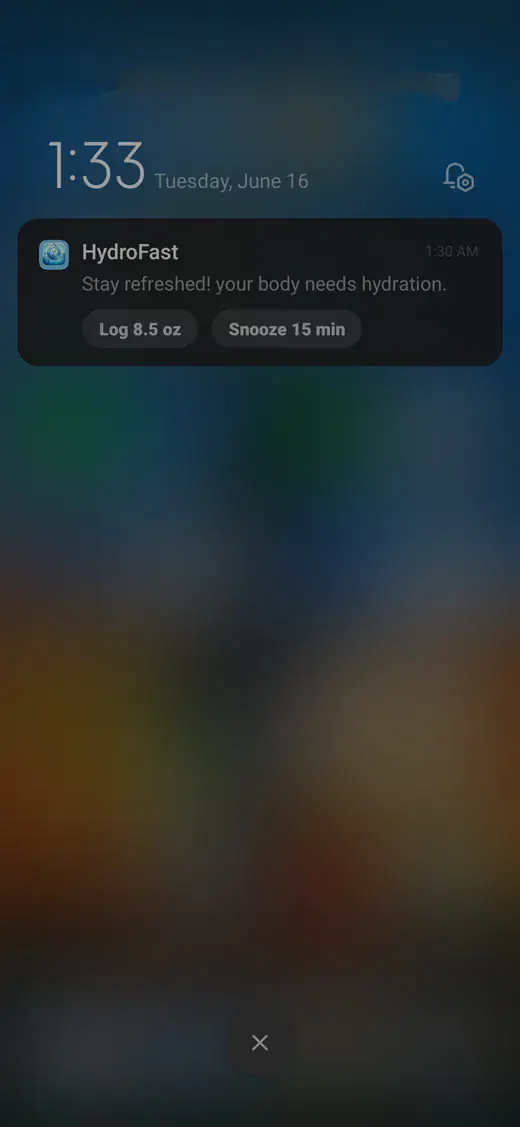
If you already know you will forget, a reminder is the simplest stand-in for the thirst signal that winter turns down. In HydroFast, hydration reminders are scheduled locally on your Android phone between the wake and sleep times in your profile. You can repeat them every 30 to 180 minutes, pick specific times, or keep smart reminders on so they adapt to how much you have already logged that day.
The reminder shown at the top of this guide carries two actions. Log 8.5 oz (250 ml when you use milliliters) records a drink without opening the app, and Snooze 15 min brings the reminder back when you are in the middle of something. One honest limit: HydroFast does not read the weather, so it will not raise your goal on cold days. Your daily goal is the number you set, 2,500 ml (about 85 oz) by default, and you can track your daily water intake against it in ounces or milliliters.
Compare your winter weeks with a warmer month
The more useful winter question is not how much you should drink in general. It is whether you are drinking less than you did in the fall. If you log water every day, you already have the data to answer it.
In HydroFast, open the Reports & Insights card on the Progress screen and build a Hydration report. The date range step offers Last 7 Days, Last 30 Days, This Month, Last Month, and a Custom range. Switching on Compare with previous period places the selected range next to the period just before it, so a cold month and the milder one before it appear in the same report.
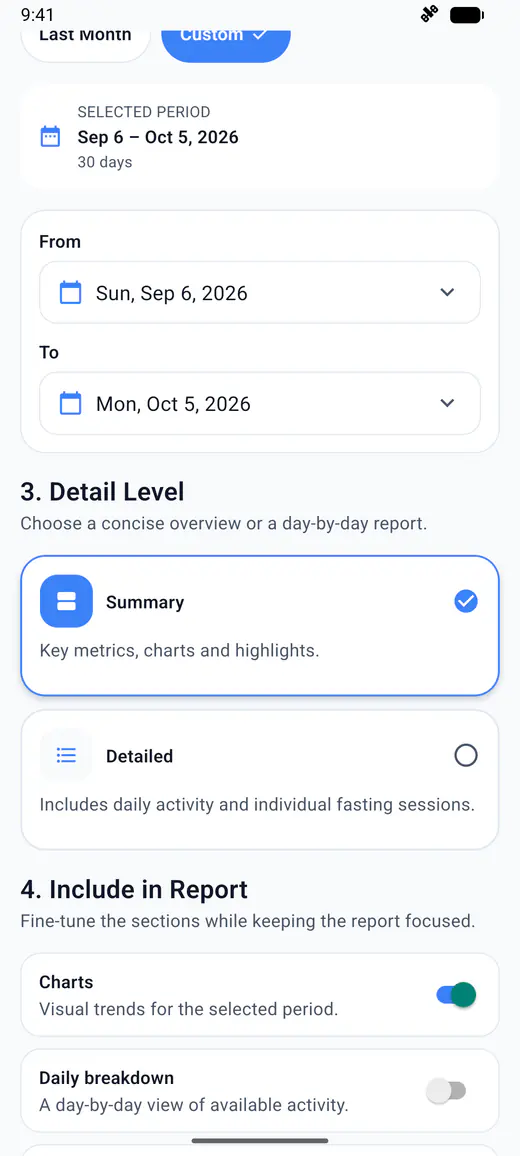
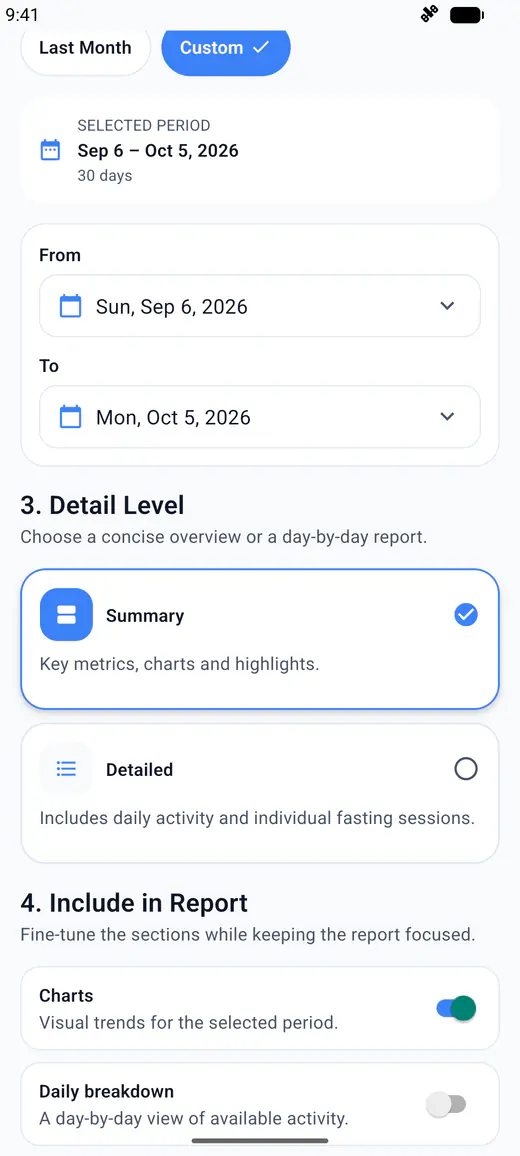
Each report shows your daily average, how many days you reached your goal, and a hydration trend chart. A one-week report draws one bar per day. Longer ranges are grouped into at most 14 bars, and including the daily breakdown keeps the day-by-day numbers. With the comparison switched on, a Compared with previous period section lists each figure next to the earlier value and the difference.
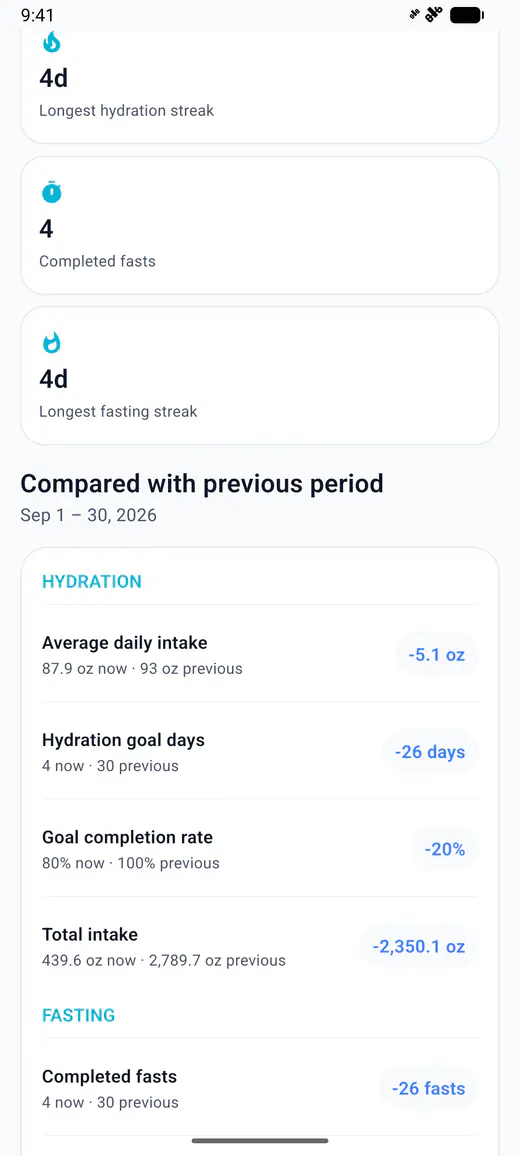
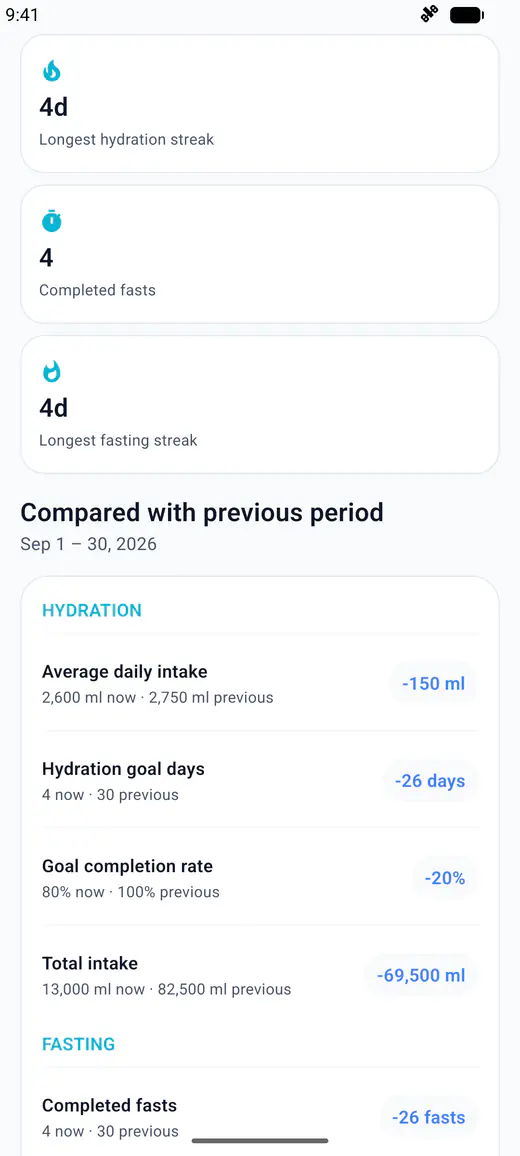
If your winter average has dropped, the fix is usually timing rather than a bigger goal. Look at which days run lowest, think about which hours of those days pass without a drink, and add one reminder there. HydroFast reports are calculated on your phone, and the PDF leaves it only if you choose to save or share it.
Common winter hydration mistakes
- Reading "not thirsty" as "not dehydrated." In the cold, the two can drift far apart.
- Cutting back in the evening to avoid bathroom trips without drinking more earlier in the day.
- Assuming you need much less water simply because it is cold outside.
- Bundling up for a workout and sweating through a base layer without replacing that fluid afterward.
- Blaming every winter headache or afternoon slump on short days without checking how much you drank.
- Raising the daily goal when the real gap is a few hours of the day when you rarely drink at all.
Who should be more careful in cold weather?
Older adults and people with conditions such as diabetes face a higher risk of dehydration, according to MedlinePlus. People who spend long hours outdoors for work or exercise also lose more water through breathing and sweat. If a clinician has asked you to limit fluids, for example because of a heart or kidney condition, follow that advice rather than general intake figures.
Related HydroFast guides
Build a water drinking habit
Anchor drinks to routines you already keep so busy days still include water.
Drinking water while fasting
What breaks a fast, which drinks are fasting-safe, and how much water still helps.
Hydration reminders on Android
Interval, custom-time, and smart reminders scheduled locally on your phone.
Hydration and fasting reports
Build on-device reports for any date range and compare periods side by side.
Winter hydration FAQ
Can you get dehydrated in cold weather?
Yes. Cold weather weakens thirst while you keep losing water through urine, breathing cold and dry air, and sweat trapped under winter clothing. Because the usual thirst signal is weaker, winter dehydration is easy to miss until symptoms such as headaches, tiredness, or darker urine appear.
Why am I not thirsty in winter?
Cold exposure narrows blood vessels in the skin, which shifts more blood toward the body's core. In a 2004 study published in Medicine & Science in Sports & Exercise, this response reduced thirst by up to 40% in cold air, even when participants were already short on fluid. Feeling less thirsty does not mean your body needs less water.
Do you need to drink less water in winter?
Not necessarily. General fluid guidance does not change with the season. The U.S. National Academies' Adequate Intake for total water is about 3.7 liters (125 oz) a day for adult men and 2.7 liters (91 oz) for adult women, from drinks and food combined. Your own needs still vary with activity, body size, and health.
Do warm drinks and soup count toward hydration?
Yes. Fluid guidance counts water from all beverages and from food, and food supplies roughly a fifth of daily water for most people. Warm water, herbal tea, warm milk, broth, and soup all add fluid, and they are often easier to drink on a cold day than a glass of cold water.
What are the signs of dehydration in winter?
The early signs are the same in any season: thirst, dry mouth, urinating less often, darker urine, dry skin, headache, and muscle cramps. In winter, people tend to blame dry skin and headaches on the weather, so urine color and how often you go are the more useful daily checks. Confusion, dizziness, a rapid heartbeat, or no urine at all need urgent medical care.
Does HydroFast change my water goal when it is cold?
No. HydroFast does not use weather data, so it does not raise or lower your goal on cold days. Your daily goal is a number you set, 2,500 ml (about 85 oz) by default, and you can change it at any time. Reminders, logging, and reports help you check whether you are actually reaching it.
Wellness disclaimer
HydroFast is a wellness and habit-tracking app. It does not provide medical advice, diagnosis, treatment, or a calculated hydration target, and it does not adjust for weather. Fluid needs differ with body size, activity, climate, health conditions, and medication, and both too little and too much fluid can matter. Talk to a qualified healthcare professional before changing your fluid intake if you have a medical condition or have been given a fluid limit.