
Quick answer
Yes, you can keep intermittent fasting during the holidays, as long as you treat the schedule as flexible. Decide in advance which days keep your usual plan and which use a shorter one, then move your eating window to fit the main meal instead of skipping the meal. Do not follow a feast with a long make-up fast. Go back to your normal plan on the next ordinary day.
Should you keep intermittent fasting during the holidays?
Keep it if it still makes your days easier, and take a break if it does not. Intermittent fasting is a way of structuring meals, and a few relaxed days do not undo the structure.
Perspective helps here. A 2026 Cochrane review of 22 randomized trials with 1,995 adults found that intermittent fasting produced no clinically meaningful difference in weight loss compared with standard dietary advice, according to Cochrane's summary. That does not make fasting pointless; plenty of people like the structure it gives their day. It does mean meal timing is not a fragile advantage that one breakfast with your family can erase.
Some people should not use intermittent fasting at all, holidays or not. Johns Hopkins Medicine lists children and teens under 18, people who are pregnant or breastfeeding, people with type 1 diabetes who take insulin, and anyone with a history of eating disorders, and it advises talking to a doctor before starting. If you are new to fasting, the busiest food weeks of the year make a hard starting point: the same page notes that getting used to intermittent fasting can take two to four weeks.
Plan the holiday week before it starts
It is much easier to decide on a quiet Tuesday than in front of the pie. Look at the week ahead and sort each day into one of three types.
On a narrow screen, scroll the table sideways. Keyboard users can focus it and use the arrow keys.
| Day type | What it looks like | A simple plan |
|---|---|---|
| Ordinary day | Work, school, and your normal meal times | Your usual plan, such as 16:8 |
| Event day | A midday feast, a late dinner, or a party | Your usual plan shifted to fit the meal, or a shorter plan such as 14:10 or 12:12 |
| Day off | A travel day, a family breakfast, or a day you would rather not count | No fast, chosen in advance rather than at the table |
Event days are the useful category. Most holiday meals fit a slightly shorter fast, or a shifted one, without abandoning the routine. Days off are fine too, as long as they are a decision you made earlier rather than one the cookie tin made for you. If you are still settling on a regular plan, see how to choose an intermittent fasting schedule that fits your day.
Travel and time zones
If you fly across time zones, start a fresh fast after your first night's sleep at your destination instead of stretching one fast across the trip and the time change. Airport meal times rarely match any plan, so travel days often work best as planned days off.
How to fit your eating window around a holiday meal
Start from the meal and count in both directions. Your eating window should contain the main meal, so the fast before it ends by the time food is served and the next fast begins after the last plate. Moving the window is easier than skipping the meal or fasting through it.
Example: an afternoon Thanksgiving dinner on 16:8
Dinner is served at 3 PM and dessert wraps up around 7 PM. An eight-hour window from 11 AM to 7 PM holds the whole meal, so the fast before it runs from 7 PM on Wednesday to 11 AM on Thursday. Stop eating at 7 PM and your next window opens at 11 AM on Friday, the same rhythm you had before the holiday.
Example: a late Christmas Eve or New Year's Eve dinner
Dinner ends at 10 PM. On 16:8, your next window would not open until 2 PM the following day, which may clash with a family brunch. Two simple options:
- Switch that day to 12:12, so the fast runs from 10 PM to 10 AM, in time for brunch.
- Use 14:10, so the window opens at noon.
These are timing illustrations, not recommendations about how long you should fast. Use a plan you already handle comfortably.
Skip the make-up fast after a big meal
Do not follow a feast with a 24-hour or longer fast to cancel it out. Go back to your usual plan the next day instead.
Johns Hopkins Medicine says longer periods without food, such as 24- to 72-hour fasts, are "not necessarily better for you, and may be dangerous." A long make-up fast also turns one big meal into two disrupted days.
The same page points out the reverse problem: filling an eating window with high-calorie food or much larger portions than usual is unlikely to help you lose weight or get healthier. A fasting window does not cancel what happens in the eating window, on a holiday or any other day. What actually resets the routine is ordinary: the next normal day, your normal plan, and normal meals.
Holiday drinks, alcohol, and hydration
Drinks are where a holiday fast most often slips without anyone noticing. Eggnog, hot chocolate, mulled cider, cocktails, and sweetened coffee drinks all contain calories, so having one during your fasting window ends the fast. Johns Hopkins lists water and zero-calorie drinks such as black coffee and tea as suitable while fasting. For the gray areas, such as sweeteners and electrolyte mixes, see what breaks a fast and which drinks are fasting-safe.
Alcohol has a second effect. The National Institute on Alcohol Abuse and Alcoholism explains that alcohol increases urination and fluid loss, and that the resulting mild dehydration likely contributes to hangover symptoms such as thirst, fatigue, and headache. A glass of wine is not a substitute for water. Keep water on the table with meals and between drinks, and remember that cold weather dulls thirst as well; here is how to stay hydrated in winter when you are not thirsty.
Keep your fasting record honest in HydroFast
A tracker is most useful after a messy week if the record shows what actually happened. If you use HydroFast, a few settings and habits keep the holiday weeks readable later.
Save a shorter plan for event days
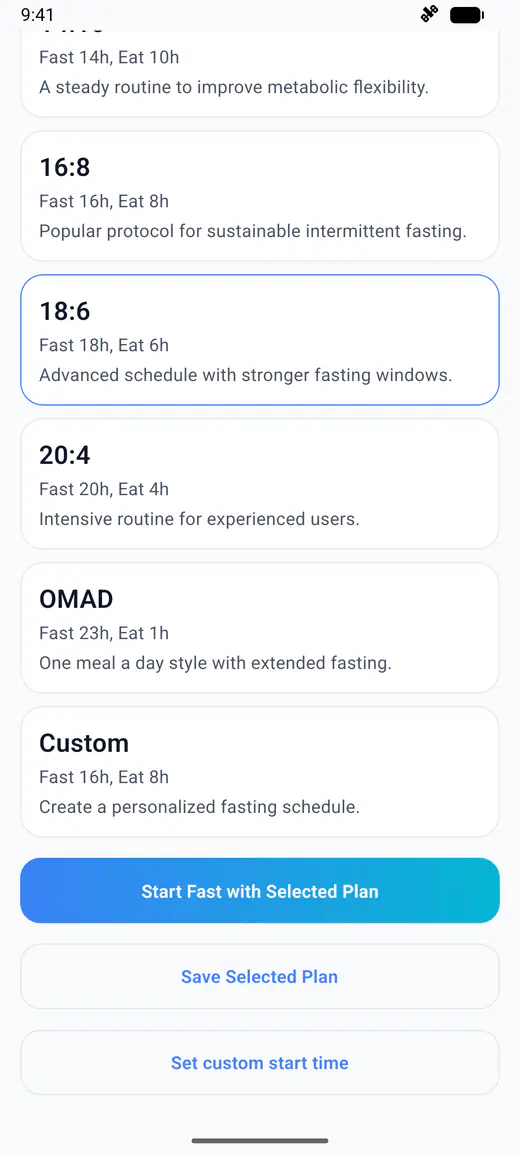
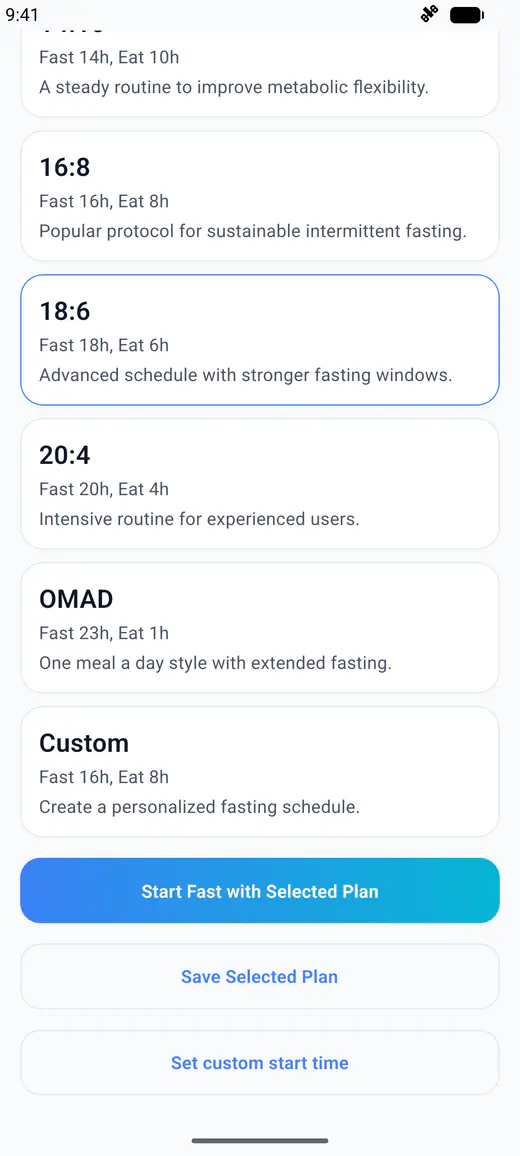
On the Fasting Plans screen, pick 12:12 or 14:10 and tap Save Selected Plan to use it for your next fast, or Start Fast with Selected Plan to begin now. A fast that is already running keeps the plan it started with, so switching plans mid-fast does not change that fast's target. Custom plans accept any fasting and eating hours from 1 to 23 that add up to 24, such as 13:11.
Log a fast that started after a late dinner
If you forget to tap Start when the last plate is cleared, the idle Fast and Home screens show Started earlier? Set custom start time once you have a saved plan. Choose the real start time. Future times are rejected, and the option starts a new fast rather than editing one you have already recorded. The fasting tracker page walks through how to record an earlier fasting start.
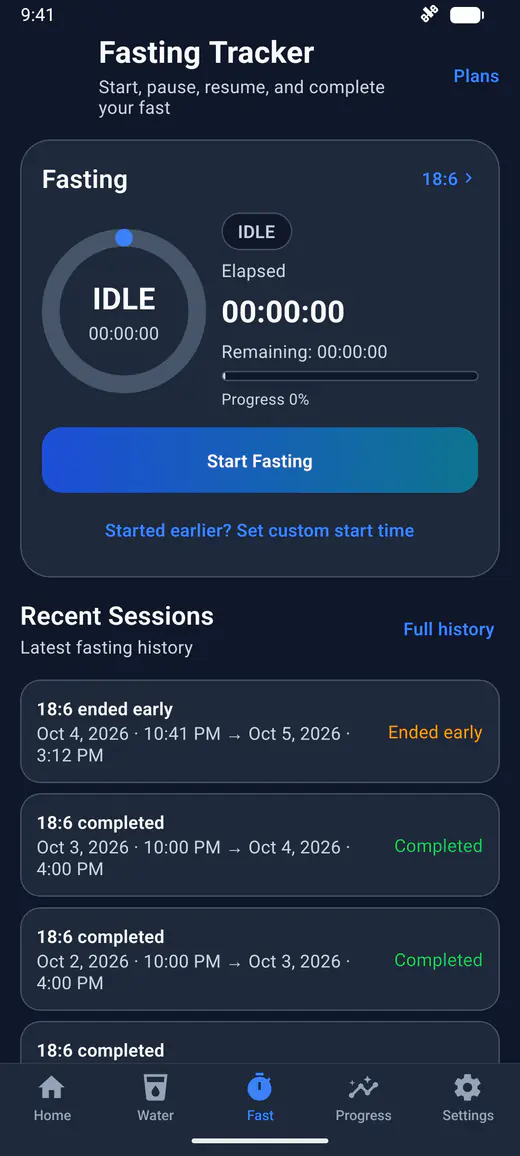
End the fast when you eat, rather than pausing it
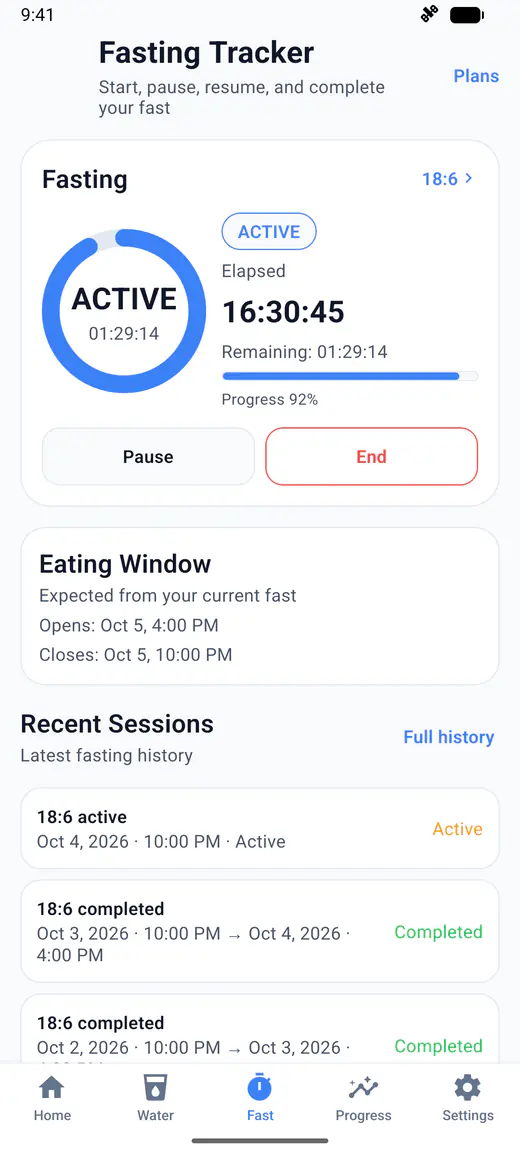
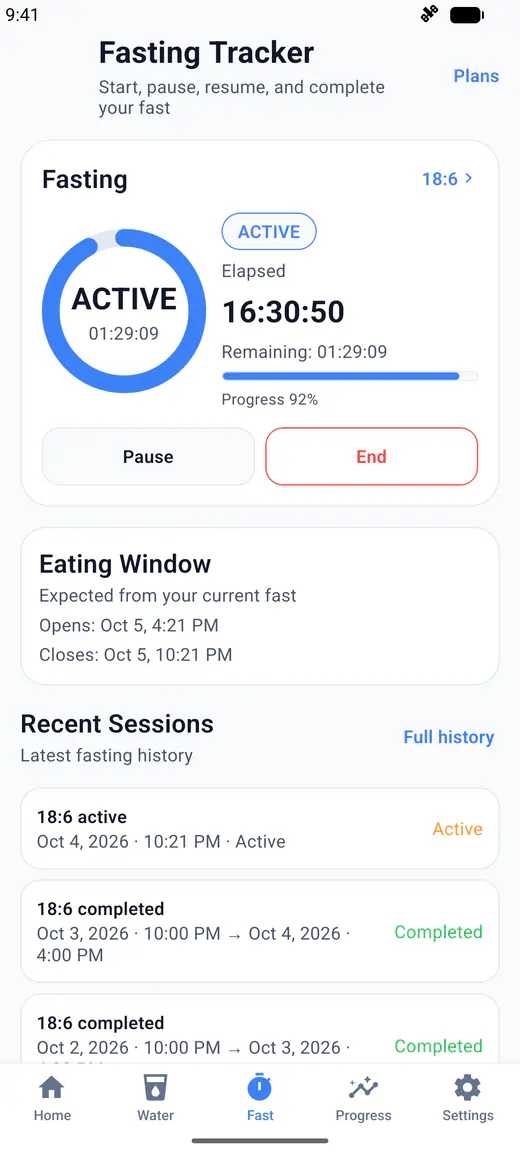
Pause keeps a session open so you can resume it, which is handy when you want to stop the clock without closing the fast. It is not a good fit for a holiday meal. HydroFast subtracts paused time and resumes counting where you left off, so a fast paused around a meal can still finish as Completed even though food interrupted it. Tapping End instead saves the session as Ended early, the honest record of that day.
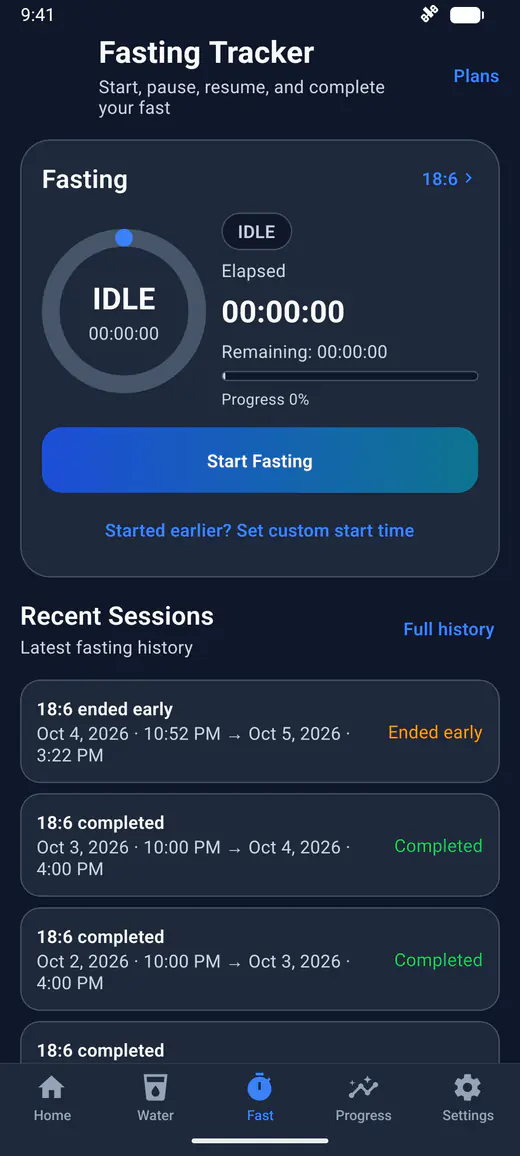
Quiet the morning reminder on days off
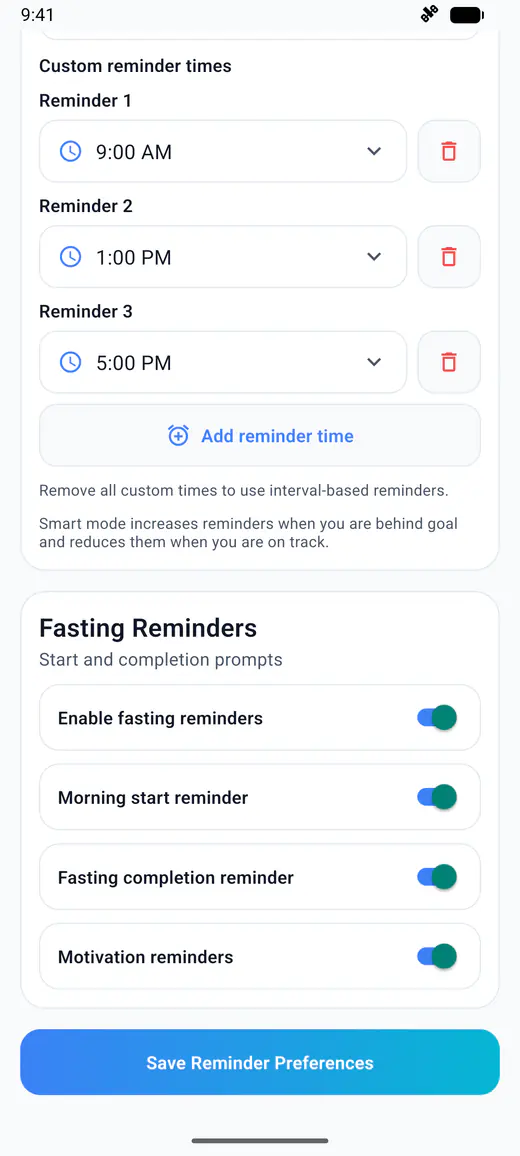
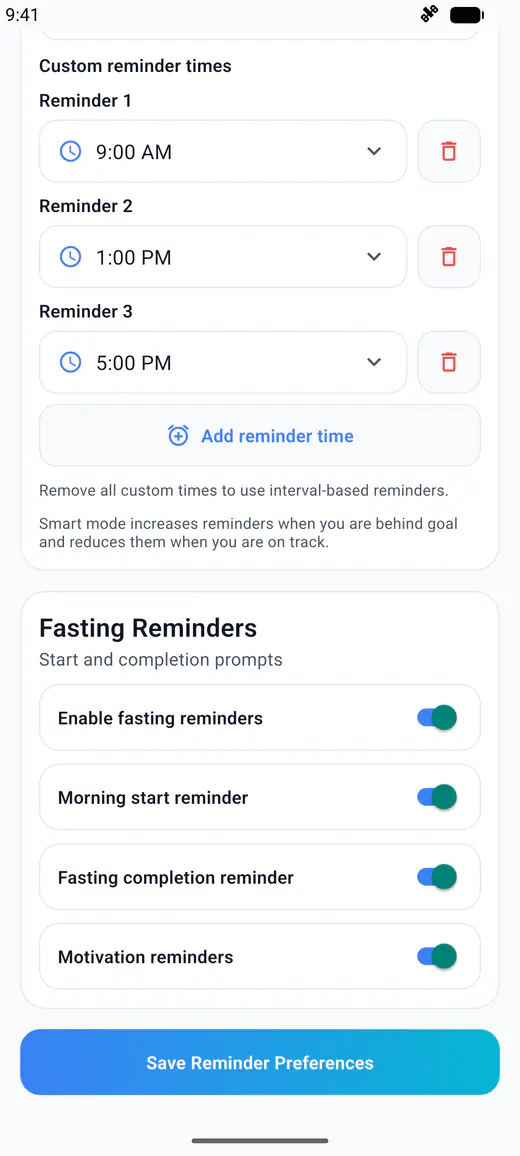
The Morning start reminder is scheduled from the wake time in your profile and needs a saved plan. The Fasting completion reminder follows the fast you are running and is cancelled when you pause or end it. On a planned day off, switch off Morning start reminder in Reminder Settings, save, and switch it back on when ordinary days return. The guide to fasting reminders on Android covers timing and troubleshooting in more detail.
Know what a day off does to your streak
The fasting streak counts consecutive days that end with a completed fast, so a day with no completed fast resets it, whether you planned the day off or ended your only fast early. Achievements you have already unlocked stay unlocked. If a streak would tempt you to fast through a family meal, decide before the holidays that it can restart in January.
How to get back on track after the holidays
Pick a restart day, go back to the plan you used before the holidays or one step shorter, and give it a couple of weeks before judging how it feels.
- Choose the day. The first ordinary weekday after New Year's is a natural reset. There is no need to wait for a Monday or to compensate first.
- Step back in gently. If the break was long, starting one plan shorter than before, such as 14:10 instead of 16:8, can make the first days easier.
- Expect an adjustment period. Johns Hopkins notes it can take two to four weeks to get used to intermittent fasting at the start, with hunger and crankiness along the way. A restart after a few weeks off may bring some of that back.
- Look at the record, not the guilt. Count what happened, then plan the next week from that.
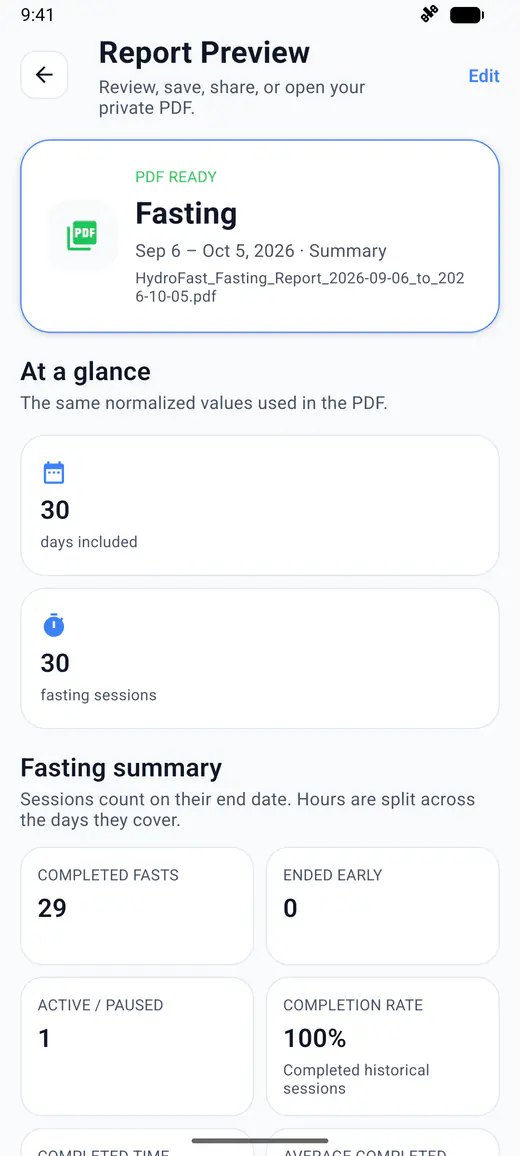
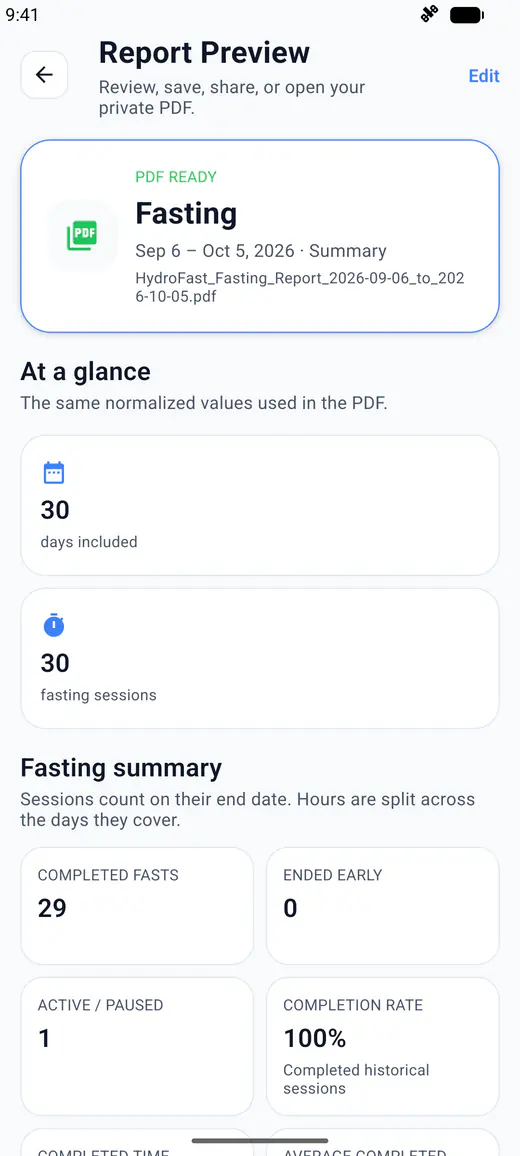
In HydroFast, open the Reports & Insights card on the Progress screen and build a Fasting report. It shows completed fasts, fasts that ended early, any active or paused session, and your completion rate for the range you choose. Pick Last Month or a custom range around the holidays, and switch on Compare with previous period to set it against the weeks before. HydroFast reports are calculated on your phone, and the PDF leaves it only if you save or share it.
The short version
Holiday fasting works best as a plan you set before the week starts: usual plan on ordinary days, a shifted or shorter plan on event days, and deliberate days off. Fit the window around the meal, keep drinks with calories inside it, skip the make-up fast, and restart on the next ordinary day. If you want the record to help you plan January, HydroFast's fasting tracker keeps completed and ended-early fasts side by side.
Related HydroFast guides
Choose a fasting schedule
Compare 12:12 through OMAD and build an eating window around your real day.
Drinking water while fasting
What breaks a fast, which drinks are fasting-safe, and how much water still helps.
Fasting reminders on Android
How morning and completion alerts are timed, and what to check when they go quiet.
Stay hydrated in winter
Why cold weather dulls thirst and how to keep drinking when it does.
Holiday fasting FAQ
Can you do intermittent fasting on Thanksgiving?
Yes. Plan the eating window around the meal instead of fasting through it. For an afternoon dinner on a 16:8 schedule, an 11 AM to 7 PM window holds the whole meal, and the next window opens at 11 AM the following day. If that timing does not work, use a shorter plan such as 14:10 or 12:12 for the day.
Does alcohol break an intermittent fast?
Yes. Alcoholic drinks contain calories, so having one during a fasting window ends the fast, and mixers, eggnog, and mulled drinks add more. Alcohol also increases urination and fluid loss, according to the U.S. National Institute on Alcohol Abuse and Alcoholism, so it does not help your water intake. If you drink, keep it inside your eating window with water alongside it.
Will one holiday meal ruin my intermittent fasting routine?
No. One meal is one day in a routine that runs for months. Go back to your usual plan on the next ordinary day instead of following the meal with a long make-up fast. Johns Hopkins Medicine notes that fasts of 24 hours or longer are not necessarily better for you and may be dangerous.
Should I pause or end a fast in HydroFast when I eat?
End it. HydroFast subtracts paused time and resumes counting where you left off, so a fast paused around a meal can still finish as Completed. Tapping End saves the session as Ended early, which keeps your history and reports accurate. Pause suits stopping the clock without closing the session, not a meal.
Does a missed fasting day break my streak in HydroFast?
Yes. The fasting streak counts consecutive days that end with a completed fast, so a day with no completed fast resets it, including a day when you ended your only fast early. Achievements you have already unlocked stay unlocked, and your history keeps every recorded session.
Who should avoid intermittent fasting during the holidays?
The same people who should avoid it at any time of year. Johns Hopkins Medicine lists children and teens under 18, people who are pregnant or breastfeeding, people with type 1 diabetes who take insulin, and anyone with a history of eating disorders, and recommends talking to a doctor before starting intermittent fasting.
Wellness disclaimer
HydroFast is a wellness and habit-tracking app. It does not provide medical advice, diagnosis, treatment, or supervised fasting, and it does not promise weight-loss or health outcomes. This guide uses the linked public sources, checked November 1, 2026. Talk to a qualified healthcare professional before fasting if you have diabetes, take medication that affects blood sugar, are pregnant or breastfeeding, or have a history of eating disorders.